Second Chances
Falling For The CEO: BAD BOY ROMANCESecond Chances names the difficult possibility at the heart of Diana Jones and William King’s relationship: love may begin again, but only after the damage caused by secrecy and past betrayal has been faced. Their reunion is therefore more than a romantic reversal. It transforms an initially unequal relationship between an employee and her employer into a deliberate attempt to build intimacy without deception, while also linking romantic healing to Diana Jones’s grief over her parents and William King’s unresolved trauma from his marriage to Julia.
The Meaning of Starting Over
Second Chances first becomes necessary because the relationship’s original promise is contaminated by mistaken identity and concealed information. Diana Jones meets William King without initially understanding that he is her employer, then discovers that he is the boss of both her and her brother, Connor Jones. At a formal gathering, Connor Jones identifies Diana Jones as his sister, and William King realises that the woman he has been attracted to is connected to him through work as well as family. Diana Jones refuses to pursue the relationship because William King is Connor Jones’s boss, presenting the workplace boundary as the reason she cannot continue. The later discovery that she herself works for William King makes that explanation incomplete and causes him to feel deceived.
William King’s discovery is especially damaging because he recognises Diana Jones in the hotel’s employee records while dealing with the threatened retrenchment of staff. The photograph makes him reinterpret her earlier surprise, her refusal to date him, and her description of herself as a tour guide. He concludes that she concealed the most important fact: she was not merely connected to his employee through family, but was his own employee. In that moment, the possibility of love shifts into suspicion, and William King places Diana Jones’s omission beside the betrayal he associates with Julia.
Starting over consequently cannot be an uncomplicated return to flirtation. Diana Jones admits that she did not disclose her workplace because she feared William King would believe she had deliberately misled him. She insists that she is genuinely a tour guide and had withheld only the fact that the work was at his hotel, but she also recognises that the omission allowed him to believe a false explanation for her resistance. Her apology is not presented as a demand for immediate forgiveness. When she visits William King, she says she is sorry for lying and hurting him, while explaining that she acted to protect herself from being hurt.
Confession, Misrecognition, and Trust
The concept depends on two major disclosures that mirror one another. Diana Jones’s confession reveals an occupational identity she had kept separate from the romantic encounter. William King’s later disclosure reveals an intimate and legal history that he had kept separate from his new relationship. In both cases, the concealed fact changes the other person’s understanding of the relationship, but the narrative distinguishes motive from consequence: fear may explain concealment without erasing its effect.
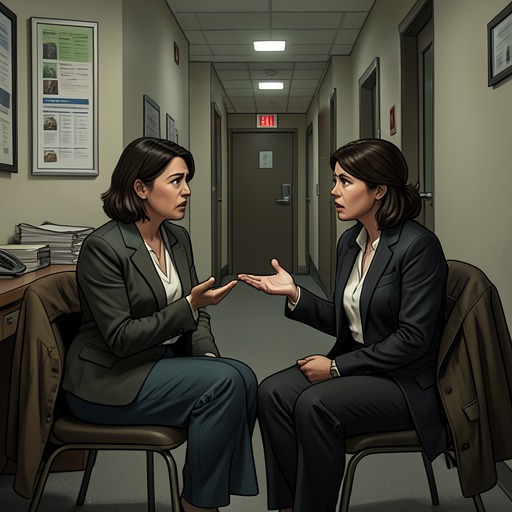
William King initially tells Diana Jones that he no longer knows who she is and cannot tell whether the person he fell for is real. His response shows how secrecy turns recognition itself into a problem. Diana Jones answers that she remains the same person he knew, even though he now refuses to accept that continuity. The conflict is not simply about whether a fact was technically false. It concerns whether affection can survive when each lover has been allowed to construct an incomplete version of the other.
The second disclosure arrives through Julia, who tells Diana Jones that William King was her husband and that they had a child. Diana Jones is shaken because William King has not told her either about his former marriage or about the child he believed was his. When she confronts him, he denies being a father. This initially appears to deepen the concealment, but William King explains that Julia’s pregnancy was discovered not to involve him. He had stayed with her for a medical appointment believing he was accompanying his pregnant wife; at the appointment, he learned that the timing made his paternity impossible. He left after the divorce and has not seen Julia since.
That history clarifies why William King’s silence is not equivalent to Diana Jones’s omission, but it does not make the silence harmless. He recounts that Julia first begged him to stay, claiming that her infidelity was a mistake and that she loved him, then blamed him for not giving her enough attention when he refused. William King describes seeing in her a selfishness he had not recognised before their marriage. His account establishes betrayal as the wound through which he interprets new intimacy, while his apology acknowledges that Diana Jones should not have been forced to learn about it from Julia.
The Condition of Reconciliation
Diana Jones’s most important second chance is also a boundary. Although she loves William King, she refuses to remain with him while he has not worked through what Julia did to him. She tells him that she is not Julia, but that his unexamined pain may cause him to treat her as though she were. The relationship therefore cannot be repaired by passion alone. Physical attraction remains powerful—their kisses repeatedly draw them back toward one another—but Diana Jones insists that desire does not prove emotional readiness.
This condition gives the concept an ethical structure. Diana Jones accepts William King’s explanation and feels compassion for his brokenness, yet she refuses to use compassion as an excuse for continued uncertainty. She asks whether he has spoken to anyone about the betrayal; when he has not, she concludes that he has not processed his feelings. Her decision to separate from him until he heals is an act of self-protection, but also an insistence that a new relationship must not become a repetition of the old one. She does not agree to be measured against Julia, punished for Julia’s actions, or made responsible for curing a wound William King has left unattended.
William King’s eventual change begins when he has time to think about Diana Jones’s words and recognises that her experience of loss resembles his own in an important emotional sense. He understands that grief and betrayal can shape present behaviour long after the original event. This recognition allows him to move from defensiveness toward responsibility. His renewed approach is not based on pretending that the disclosures never happened; it is based on accepting that they must be part of the truth between them.
Reunion and Emotional Repair
When William King asks Diana Jones to start over, he specifies that he wants to be with her without the lie between them. The request marks a shift from wanting access to the old romance to proposing a different form of it. He does not deny the concealed facts, and Diana Jones does not erase her earlier fear or his earlier anger. Instead, the kiss that follows the request functions as a threshold: affection can return only after the relationship has been named as damaged and the source of the damage has been identified.
Their renewed relationship quickly becomes lighter because knowledge has replaced anxious concealment. Diana Jones reflects that only two weeks have passed since they decided to begin again, yet the pressure between them has dissolved into laughter, flirting, and love. She feels freer because William King knows everything, and she no longer expects their happiness to collapse when another hidden fact emerges. Their daily meetings, private kisses in the passageway before shift changes, and the special smile William King reserves for her show reconciliation becoming routine rather than remaining a single dramatic promise.
The reunion also reaches beyond the couple’s immediate conflict. Diana Jones experiences her love for William King as easing, though not abolishing, the ache left by her parents’ deaths. The loss remains part of her life, but the relationship gives her relief from the pain that had accompanied it. This is not a claim that romance cures bereavement; rather, the possibility of beginning again allows Diana Jones to live alongside grief without being wholly defined by it.
The Final Chance
The decisive second chance comes when William King returns after their separation and openly accepts responsibility for the pain he caused. He tells Diana Jones that he married the wrong woman and that he recognised the depth of his feelings for her only when he feared losing her. More importantly, he asks whether she will give him another chance, then repeats the request when she needs reassurance that he is certain and ready.
Diana Jones’s joyful acceptance completes the movement from concealment to chosen trust. Her tears are no longer caused by shock or hurt but by the relief of hearing William King commit himself clearly. Their kiss restores peace after the turmoil surrounding the picnic and the revelations about Julia. Even her decision not to accept another hotel position becomes part of the renewed balance: she remains in the workplace where their conflict began, now with the truth acknowledged and the professional boundary openly recognised rather than disguised.
Second Chances therefore carries both romantic and moral weight. It promises neither an untouched past nor a happiness made credible by forgetting. Diana Jones and William King reunite because disclosure, apology, accountability, and the willingness to heal have altered the terms of their relationship. The final promise is not that damage never occurred, but that love can be attempted again when both people are prepared to see one another fully.